

Prospecting Tips
What Creative Directors Actually Notice Before They Reply
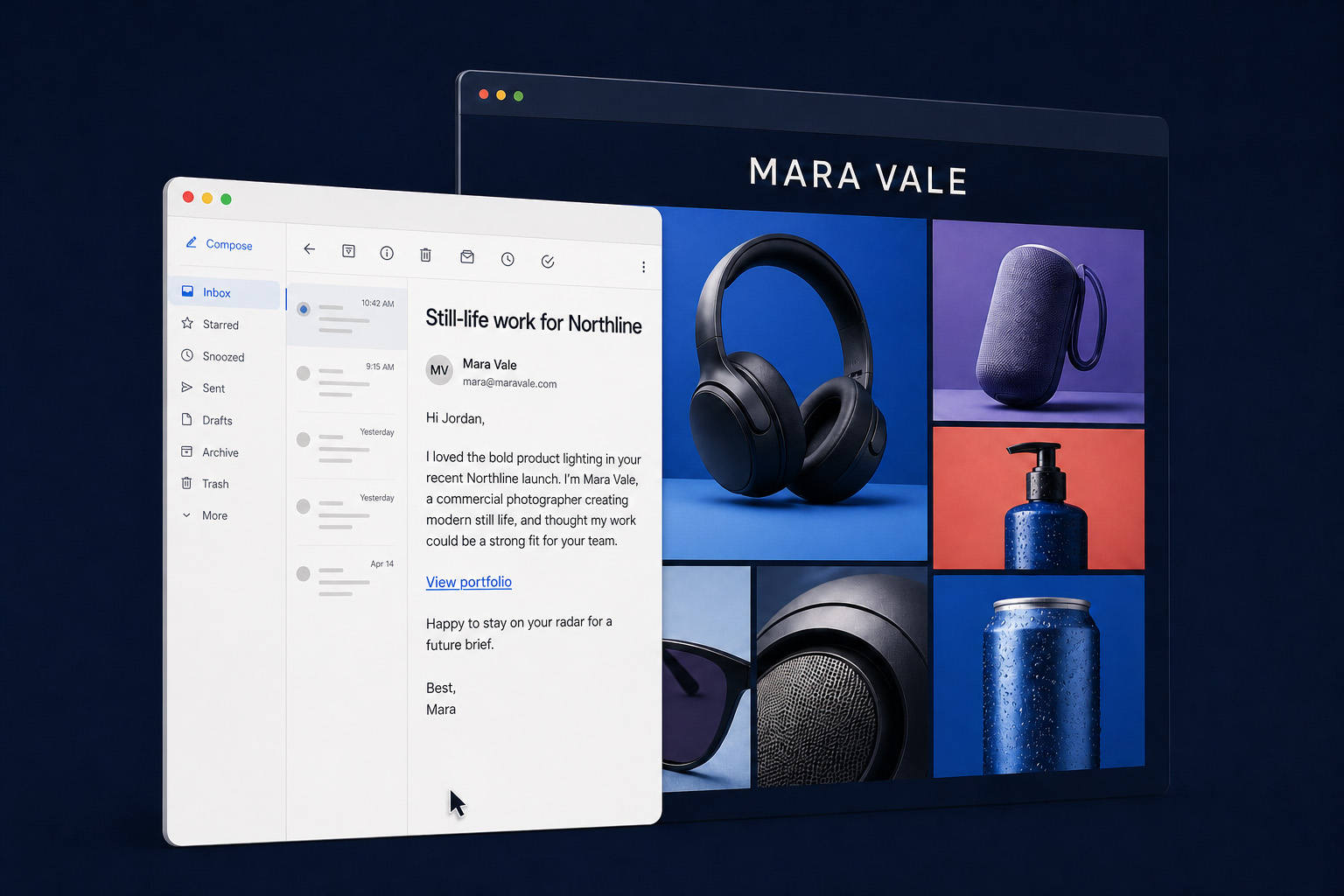
You've found the right creative director. You've researched the agency, looked at the work, and written an email that doesn't sound like it was sent to 200 people at once.
Now comes the harder part: getting them to actually reply.
Creative directors are busy. Their inboxes are full, their attention is split across clients, teams, pitches, production, and whatever fire appeared five minutes ago. When they open an email from a photographer, illustrator, director, or other creative professional they don't know, they're usually making a series of very quick decisions.
Is this relevant to me? Is the work good? Can I picture using this person? Is there a reason to keep looking?
The good news is that you don't need a long pitch to answer those questions. In fact, the things that matter most often happen before a creative director has read more than a few lines.
1. Whether you understand what they actually do
Personalization isn't about proving that you found someone's LinkedIn profile. It's about showing that you understand why your work might be relevant to them.
There's a big difference between:
"I've been following your agency and love your work."
and:
"I saw the campaign your team recently created for [Brand]. The way you handled [specific detail] caught my attention, and it felt closely aligned with the kind of work I've been shooting lately."
The second gives the creative director a reason to believe you chose them intentionally.
Before you reach out, look beyond the agency homepage. Research the agency before you pitch, paying attention to the clients they work with, the kinds of campaigns they produce, the creative styles that show up repeatedly, and the work the person you're contacting has actually been involved in.
You don't need to write a research report; one specific, relevant detail can do more than an entire paragraph of generic praise.
2. What they see when they click
If your email does its job, there's a good chance the next move isn't replying—it's clicking. That makes your portfolio one of the most important parts of the pitch.
A creative director should be able to land on your site and quickly understand what you do, what you're especially good at, and whether your work could fit something on their plate.
That means your strongest, most relevant work should be easy to find. If you're pitching an agency known for food and beverage campaigns, don't make someone dig through three galleries before they find your food work.
Your portfolio doesn't need to contain everything you've ever made. It needs to make the right work easy to see.
3. Whether your work feels relevant right now
Great work matters. Relevant great work matters more.
Creative directors aren't necessarily looking for the "best photographer" or "best illustrator" in some universal sense. They're thinking about actual briefs, clients, aesthetics, production needs, and ideas.
That's why targeting matters so much. Maybe your style fits the visual language of several brands on the agency's roster. Maybe you have experience in a category they work in constantly. Maybe your location, production capabilities, or specialty makes you particularly useful for the kind of work they produce.
Help them make that connection. Instead of asking them to imagine every possible way they could hire you, give them a clear reason your work belongs on their radar.
4. How quickly they can understand your point of view
Strong portfolios tend to have a point of view. That doesn't mean every image needs to look identical. It means there's something recognizable about how you approach the work: your lighting, composition, humor, subject matter, color, storytelling, or the kinds of moments you notice.
Creative directors see a lot of technically strong work; what sticks is often the work they can remember later. If someone can leave your portfolio with a clear sense of what they'd call you for, you've made their job easier. That matters even if there isn't a project for you today.
5. Whether your email respects their time
A cold email doesn't need to tell your entire story. Creative directors generally need enough information to understand who you are, why you're reaching out, and where they can see your work. Everything else can come later.
It also helps to understand how different agency teams come together on a campaign so you're tailoring the message to the person receiving it rather than treating every creative contact the same way.
A useful first email usually includes:
- A clear, straightforward subject line
- A brief introduction
- A specific reason you're reaching out to that person or agency
- A sentence or two connecting your work to theirs
- One obvious link to your portfolio or relevant project
- A simple, low-pressure next step
What it usually doesn't need is your full biography, a list of every client you've worked with, five different links, or three paragraphs explaining your creative philosophy. Make it easy to scan—if they're interested, they'll keep going.
6. Whether you seem like someone they could actually work with
Your portfolio gets you noticed. The rest of your presence helps answer another question: What would it be like to hire you?
You don't need to manufacture a polished personal brand or turn every email into a personality showcase. Small signals are enough, like:
- A clear website
- A professional email
- An easy way to find your location and contact information
- Recent work that shows you're active
- A pitch that sounds like it came from an actual person
Creative directors aren't only hiring a visual style. They're bringing someone into a process that may involve clients, producers, art directors, tight timelines, shifting feedback, and plenty of moving parts.
7. Whether you give them a reason to remember you
Not every good pitch gets an immediate response. Sometimes the timing is wrong. Sometimes there isn't a relevant project. Sometimes your email lands during a pitch, a shoot, a client emergency, or a particularly chaotic Tuesday.
That doesn't mean the outreach failed. One of the most valuable outcomes of prospecting is simply becoming familiar. A creative director sees your name, looks at your work, and files it away mentally. Then you follow up a few months later with a new project. They see you again on LinkedIn. Six months from now, a brief lands on their desk and your work suddenly makes sense for it.
That's why consistent, thoughtful outreach beats sending one giant batch of emails and hoping something sticks. Start with a focused list of the clients and agencies you actually want to work with, then build recognition with the right people over time.
Before you hit send
Give your outreach one final check from the creative director's side of the inbox:
- Is it immediately clear what I do?
- Is there a real reason I'm contacting this person?
- Does the work I'm showing make sense for their agency or clients?
- Can they get to the relevant portfolio quickly?
- Does the email sound like a person rather than a template?
- Have I given them an easy next step?
- Would they have a reason to remember me even if they don't need me today?
You can't control whether someone has the right project sitting on their desk when your email arrives, but you can control whether your outreach makes it easy for them to see where you might fit.
That's the real goal: not simply getting into the inbox, but giving the right creative director a reason to keep you on their radar.
Find the right people to put you on their radar
Agency Access helps photographers, illustrators, directors, and other creative professionals identify the agencies, brands, and decision-makers most relevant to their work.
Instead of spending hours piecing together prospect lists on your own, you can research the people you actually want to reach, build targeted lists, and turn that research into a more focused outreach strategy.
Wondering how agencies find creative talent in the first place?
We break down how agencies build their freelance networks, where they look for new creative partners, and how you can make it easier to get on their radar in How Agencies Find Freelancers & Creative Partners.

Build your pipeline
with Agency Access
Already have an account?
An account with the same email address already exists. To continue, login to your account.
Login-
 7-day free trial
-
No obligation
-
Cancel anytime


